Leader's Digest
Anatomy of a Perfect Drop: Minimising Failed Deliveries in the Steel and Construction Industry
6 Min Read


Failed and futile deliveries are a massive financial drain. In the heavy industrial sector, a missed delivery is highly disruptive. Moving structural steel, reinforcement mesh, and precast concrete requires complex logistics. When a site delivery fails, it triggers a costly chain reaction.
This article explores how modern heavy-fleet dispatch technology eliminates delivery failures. It outlines how to safeguard profit margins and elevate the site manager experience.
The True Cost of Failed Industrial Deliveries
Unlike big-ticket retail where a failed delivery means a rescheduled parcel, in the steel and construction sectors, the stakes are far higher. A failed drop stalls expensive site crews and halts projects. The hidden financial impacts of futile construction logistics include:
Excessive Transport Expenses: Paying for secondary heavy vehicle transport, specialised rigging, and crane hire.
Complex Reverse Logistics: Heavy structural loads must return to production yards, wasting fuel and driver hours.
Site Delay Penalties: Project timelines slip, triggering substantial contract penalties.
Safety Hazards: Unplanned load handling increases the risk of site accidents and structural damage claims.
Key Operational Challenges in Heavy Outbound Logistics
Managing heavy vehicle logistics presents unique operational barriers. Construction sites are dynamic environments with strict constraints. The most frequent causes of failed drops include:
Site Inaccessibility: Tight urban entry gates that cannot accommodate extended flatbeds.
Missing On-Site Equipment: Arriving before cranes or forklifts are available to offload heavy cargo.
Poor Communication: Site managers unaware of exact vehicle arrival times, leading to locked gates.
Vague Proof of Delivery: Relying on paper delivery notes that get lost or damaged in wet weather.
Eliminating Futile Deliveries: Traditional Methods vs. Radaro
Although modern construction operations require agile, cloud-based last-mile tracking tools to ensure success, many logistics operations still rely on manual tracking or outdated telematics.
Operational Feature | Legacy Tracking Systems | Radaro Delivery Management Platform |
|---|---|---|
ETA Precision | Broad, multi-hour estimated windows | Dynamic, AI-driven real-time tracking |
Site Notifications | Manual phone calls from dispatchers | Automated milestone SMS alerts with live maps |
Proof of Delivery (PoD) | Vulnerable, handwritten paper dockets | Instant digital signatures, GPS coordinates, and photos |
Dispute Resolution | Lengthy investigations and finger-pointing | Immediate clarity via the customer portal history |
A Strategic Framework for Flawless Steel Deliveries
Eliminating failed deliveries demands a structured approach to dispatching and execution. When an industry-leading manufacturer and distributor of fencing, gates, screens, and balustrades implemented advanced last-mile software to gain full operational control, the results were immediate: they doubled their delivery capacity within two months using their existing team and fleet.
1. Dynamic Last-Mile Route Optimisation
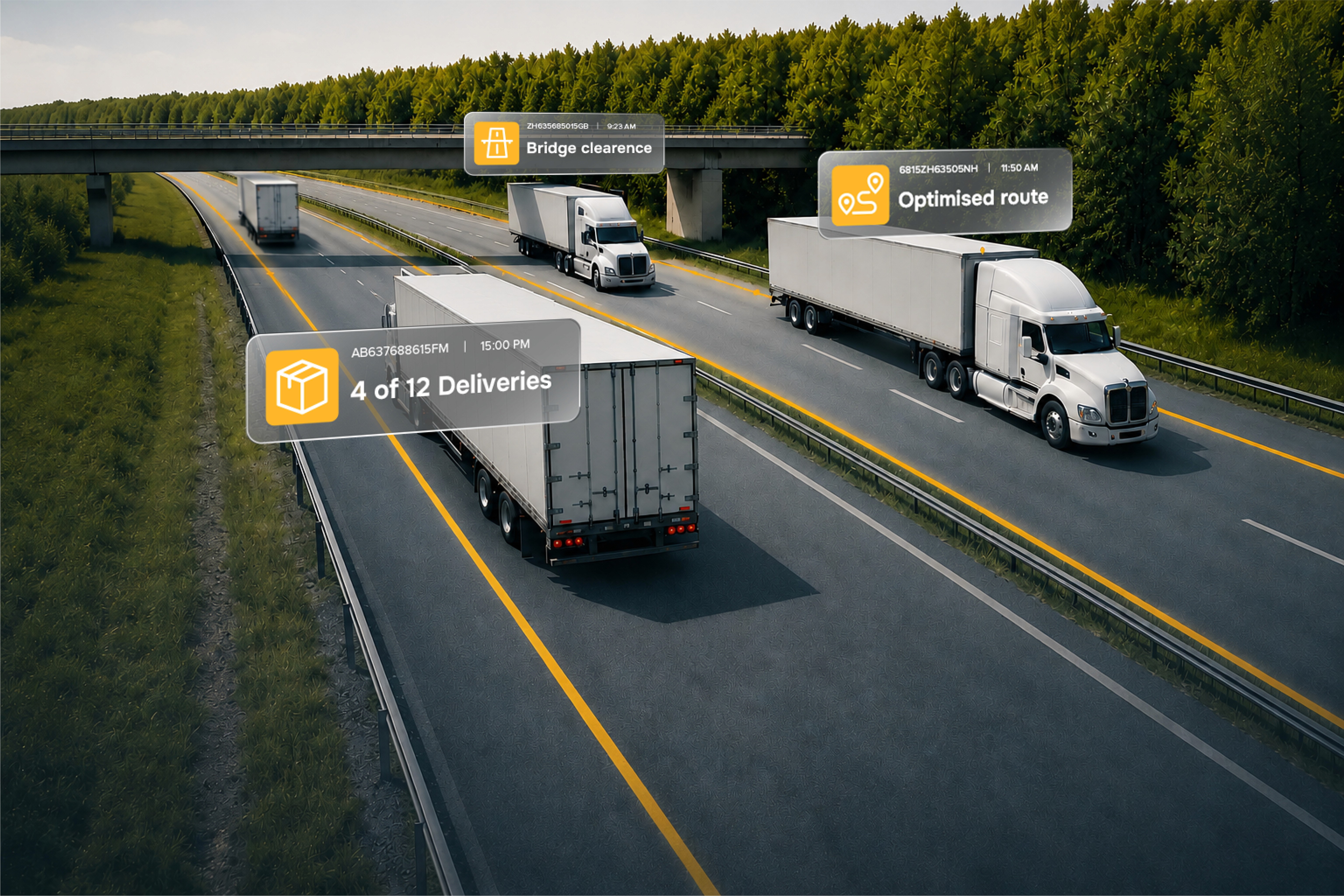
Heavy vehicles cannot use standard navigation tools. Route optimisation software allows planners to input vehicle dimensions, weight limits, and site time windows. This ensures drivers follow compliant routes and arrive exactly when the site is ready to receive them.
2. Automated, Milestone-Based Site Alerts
Eliminate the need for site managers to call dispatchers. Automated SMS notifications alert site contacts when a vehicle leaves the fabrication yard. Alerts can be timed to go out for example when the driver is 15 minutes away, providing a live tracking link. This gives crews ample time to clear access paths and position cranes.
3. Rigorous Digital Chain of Custody
Paper dockets delay invoicing and fail to protect against damage claims. Instead, drivers use integrated mobile apps to secure digital signatures, log timestamps, and take high-resolution photos of the delivered steel. This digital proof instantly syncs back to the warehouse management system (WMS).
[Job Created in WMS] >> [Radaro Optimises Route] >> [Automated SMS to Site Manager] >> (Live Map Tracking) >> [Driver Arrives On-Site] >> [Digital PoD Captured] >> (Photos, Signature, GPS Saved)
Long-Term Benefits of Digitising the Outbound Process
Moving away from legacy tracking platforms yields significant commercial rewards. Steel fabricators and construction suppliers build a stronger competitive advantage.
Substantial Cost Reductions: Cutting down futile journeys directly lowers fuel burn and driver overtime costs.
Improved Fleet Utilisation: Efficient routing enables heavy vehicles to complete more site drops per shift.
Stronger Commercial Relationships: Delivering materials reliably helps tier-one contractors stay on schedule.
Reduced Liability Claims: Comprehensive photo documentation provides irrefutable proof of load condition at drop-off.
Optimise Your Heavy Fleet Operations
Preventing failed deliveries requires absolute visibility over the outbound supply chain. Embracing smart dispatching and live tracking turns last-mile logistics from a high-risk expense into an efficient, predictable process.
Are you ready to remove the guesswork from your construction logistics? Explore how the Radaro Delivery Management Platform optimises heavy fleet drops and eliminates costly futile runs.
Failed and futile deliveries are a massive financial drain. In the heavy industrial sector, a missed delivery is highly disruptive. Moving structural steel, reinforcement mesh, and precast concrete requires complex logistics. When a site delivery fails, it triggers a costly chain reaction.
This article explores how modern heavy-fleet dispatch technology eliminates delivery failures. It outlines how to safeguard profit margins and elevate the site manager experience.
The True Cost of Failed Industrial Deliveries
Unlike big-ticket retail where a failed delivery means a rescheduled parcel, in the steel and construction sectors, the stakes are far higher. A failed drop stalls expensive site crews and halts projects. The hidden financial impacts of futile construction logistics include:
Excessive Transport Expenses: Paying for secondary heavy vehicle transport, specialised rigging, and crane hire.
Complex Reverse Logistics: Heavy structural loads must return to production yards, wasting fuel and driver hours.
Site Delay Penalties: Project timelines slip, triggering substantial contract penalties.
Safety Hazards: Unplanned load handling increases the risk of site accidents and structural damage claims.
Key Operational Challenges in Heavy Outbound Logistics
Managing heavy vehicle logistics presents unique operational barriers. Construction sites are dynamic environments with strict constraints. The most frequent causes of failed drops include:
Site Inaccessibility: Tight urban entry gates that cannot accommodate extended flatbeds.
Missing On-Site Equipment: Arriving before cranes or forklifts are available to offload heavy cargo.
Poor Communication: Site managers unaware of exact vehicle arrival times, leading to locked gates.
Vague Proof of Delivery: Relying on paper delivery notes that get lost or damaged in wet weather.
Eliminating Futile Deliveries: Traditional Methods vs. Radaro
Although modern construction operations require agile, cloud-based last-mile tracking tools to ensure success, many logistics operations still rely on manual tracking or outdated telematics.
Operational Feature | Legacy Tracking Systems | Radaro Delivery Management Platform |
|---|---|---|
ETA Precision | Broad, multi-hour estimated windows | Dynamic, AI-driven real-time tracking |
Site Notifications | Manual phone calls from dispatchers | Automated milestone SMS alerts with live maps |
Proof of Delivery (PoD) | Vulnerable, handwritten paper dockets | Instant digital signatures, GPS coordinates, and photos |
Dispute Resolution | Lengthy investigations and finger-pointing | Immediate clarity via the customer portal history |
A Strategic Framework for Flawless Steel Deliveries
Eliminating failed deliveries demands a structured approach to dispatching and execution. When an industry-leading manufacturer and distributor of fencing, gates, screens, and balustrades implemented advanced last-mile software to gain full operational control, the results were immediate: they doubled their delivery capacity within two months using their existing team and fleet.
1. Dynamic Last-Mile Route Optimisation
Heavy vehicles cannot use standard navigation tools. Route optimisation software allows planners to input vehicle dimensions, weight limits, and site time windows. This ensures drivers follow compliant routes and arrive exactly when the site is ready to receive them.
2. Automated, Milestone-Based Site Alerts
Eliminate the need for site managers to call dispatchers. Automated SMS notifications alert site contacts when a vehicle leaves the fabrication yard. Alerts can be timed to go out for example when the driver is 15 minutes away, providing a live tracking link. This gives crews ample time to clear access paths and position cranes.
3. Rigorous Digital Chain of Custody
Paper dockets delay invoicing and fail to protect against damage claims. Instead, drivers use integrated mobile apps to secure digital signatures, log timestamps, and take high-resolution photos of the delivered steel. This digital proof instantly syncs back to the warehouse management system (WMS).
[Job Created in WMS] >> [Radaro Optimises Route] >> [Automated SMS to Site Manager] >> (Live Map Tracking) >> [Driver Arrives On-Site] >> [Digital PoD Captured] >> (Photos, Signature, GPS Saved)
Long-Term Benefits of Digitising the Outbound Process
Moving away from legacy tracking platforms yields significant commercial rewards. Steel fabricators and construction suppliers build a stronger competitive advantage.
Substantial Cost Reductions: Cutting down futile journeys directly lowers fuel burn and driver overtime costs.
Improved Fleet Utilisation: Efficient routing enables heavy vehicles to complete more site drops per shift.
Stronger Commercial Relationships: Delivering materials reliably helps tier-one contractors stay on schedule.
Reduced Liability Claims: Comprehensive photo documentation provides irrefutable proof of load condition at drop-off.
Optimise Your Heavy Fleet Operations
Preventing failed deliveries requires absolute visibility over the outbound supply chain. Embracing smart dispatching and live tracking turns last-mile logistics from a high-risk expense into an efficient, predictable process.
Are you ready to remove the guesswork from your construction logistics? Explore how the Radaro Delivery Management Platform optimises heavy fleet drops and eliminates costly futile runs.
Subscribe to our Newsletter
Get Started with Radaro
Last mile delivery software designed for complex, real-world logistics.


Failed and futile deliveries are a massive financial drain. In the heavy industrial sector, a missed delivery is highly disruptive. Moving structural steel, reinforcement mesh, and precast concrete requires complex logistics. When a site delivery fails, it triggers a costly chain reaction.
This article explores how modern heavy-fleet dispatch technology eliminates delivery failures. It outlines how to safeguard profit margins and elevate the site manager experience.
The True Cost of Failed Industrial Deliveries
Unlike big-ticket retail where a failed delivery means a rescheduled parcel, in the steel and construction sectors, the stakes are far higher. A failed drop stalls expensive site crews and halts projects. The hidden financial impacts of futile construction logistics include:
Excessive Transport Expenses: Paying for secondary heavy vehicle transport, specialised rigging, and crane hire.
Complex Reverse Logistics: Heavy structural loads must return to production yards, wasting fuel and driver hours.
Site Delay Penalties: Project timelines slip, triggering substantial contract penalties.
Safety Hazards: Unplanned load handling increases the risk of site accidents and structural damage claims.
Key Operational Challenges in Heavy Outbound Logistics
Managing heavy vehicle logistics presents unique operational barriers. Construction sites are dynamic environments with strict constraints. The most frequent causes of failed drops include:
Site Inaccessibility: Tight urban entry gates that cannot accommodate extended flatbeds.
Missing On-Site Equipment: Arriving before cranes or forklifts are available to offload heavy cargo.
Poor Communication: Site managers unaware of exact vehicle arrival times, leading to locked gates.
Vague Proof of Delivery: Relying on paper delivery notes that get lost or damaged in wet weather.
Eliminating Futile Deliveries: Traditional Methods vs. Radaro
Although modern construction operations require agile, cloud-based last-mile tracking tools to ensure success, many logistics operations still rely on manual tracking or outdated telematics.
Operational Feature | Legacy Tracking Systems | Radaro Delivery Management Platform |
|---|---|---|
ETA Precision | Broad, multi-hour estimated windows | Dynamic, AI-driven real-time tracking |
Site Notifications | Manual phone calls from dispatchers | Automated milestone SMS alerts with live maps |
Proof of Delivery (PoD) | Vulnerable, handwritten paper dockets | Instant digital signatures, GPS coordinates, and photos |
Dispute Resolution | Lengthy investigations and finger-pointing | Immediate clarity via the customer portal history |
A Strategic Framework for Flawless Steel Deliveries
Eliminating failed deliveries demands a structured approach to dispatching and execution. When an industry-leading manufacturer and distributor of fencing, gates, screens, and balustrades implemented advanced last-mile software to gain full operational control, the results were immediate: they doubled their delivery capacity within two months using their existing team and fleet.
1. Dynamic Last-Mile Route Optimisation
Heavy vehicles cannot use standard navigation tools. Route optimisation software allows planners to input vehicle dimensions, weight limits, and site time windows. This ensures drivers follow compliant routes and arrive exactly when the site is ready to receive them.
2. Automated, Milestone-Based Site Alerts
Eliminate the need for site managers to call dispatchers. Automated SMS notifications alert site contacts when a vehicle leaves the fabrication yard. Alerts can be timed to go out for example when the driver is 15 minutes away, providing a live tracking link. This gives crews ample time to clear access paths and position cranes.
3. Rigorous Digital Chain of Custody
Paper dockets delay invoicing and fail to protect against damage claims. Instead, drivers use integrated mobile apps to secure digital signatures, log timestamps, and take high-resolution photos of the delivered steel. This digital proof instantly syncs back to the warehouse management system (WMS).
[Job Created in WMS] >> [Radaro Optimises Route] >> [Automated SMS to Site Manager] >> (Live Map Tracking) >> [Driver Arrives On-Site] >> [Digital PoD Captured] >> (Photos, Signature, GPS Saved)
Long-Term Benefits of Digitising the Outbound Process
Moving away from legacy tracking platforms yields significant commercial rewards. Steel fabricators and construction suppliers build a stronger competitive advantage.
Substantial Cost Reductions: Cutting down futile journeys directly lowers fuel burn and driver overtime costs.
Improved Fleet Utilisation: Efficient routing enables heavy vehicles to complete more site drops per shift.
Stronger Commercial Relationships: Delivering materials reliably helps tier-one contractors stay on schedule.
Reduced Liability Claims: Comprehensive photo documentation provides irrefutable proof of load condition at drop-off.
Optimise Your Heavy Fleet Operations
Preventing failed deliveries requires absolute visibility over the outbound supply chain. Embracing smart dispatching and live tracking turns last-mile logistics from a high-risk expense into an efficient, predictable process.
Are you ready to remove the guesswork from your construction logistics? Explore how the Radaro Delivery Management Platform optimises heavy fleet drops and eliminates costly futile runs.
Subscribe to our Newsletter
Get Started with Radaro
Last mile delivery software designed for complex, real-world logistics.
Related Posts
Related Posts
Leader's Digest Insights
Take Control of Your Last Mile
Discover what Radaro can do for you



"/><stop offset="1" stop-color="rgba(114, 163, 190, 0)"/></linearGradient></defs><g d="M 72 37.3 L 96.4 37.3 C 98.6 37.3 100.4 35.7 100.6 33.5 C 100.8 31.3 101.2 27.1 101.2 22.2 C 101.2 17.3 101 14.4 100.7 12.1 C 100.4 9.8 98.7 8.4 96.5 8.4 L 72 8.4 L 72 37.2 Z M 80 30.3 L 77.3 30.3 L 77.3 4.9 L 80 4.9 Z M 71 5.1 C 71.552 5.1 72 5.548 72 6.1 L 72 37.6 C 72 38.152 71.552 38.6 71 38.6 L 1 38.6 C 0.448 38.6 0 38.152 0 37.6 L 0 6.1 C 0 5.548 0.448 5.1 1 5.1 Z M 97.5 37.1 L 5.2 37.1 L 5.2 27.3 L 100.5 27.3 L 100.5 34.1 C 100.5 35.8 99.2 37.1 97.5 37.1 Z M 79.5 31.7 L 99.4 31.7 C 101.6 31.7 103.4 30.1 103.6 27.9 C 103.8 25.7 104.2 21.5 104.2 16.6 C 104.2 12.1 104 8.8 103.7 6.5 C 103.4 4.2 101.7 2.8 99.5 2.8 L 79.5 2.8 L 79.5 31.6 Z M 88.7 28.2 L 94.3 29.3 L 102 30.8 C 101.3 31.3 100.4 31.7 99.4 31.7 L 79.5 31.7 L 79.5 28.2 Z M 76.4 1.2 C 76.952 1.2 77.4 1.648 77.4 2.2 L 77.4 31.9 C 77.4 32.452 76.952 32.9 76.4 32.9 L 6.4 32.9 C 5.848 32.9 5.4 32.452 5.4 31.9 L 5.4 2.2 C 5.4 1.648 5.848 1.2 6.4 1.2 Z M 76.9 32.7 L 5.7 32.7 L 5.7 31.1 L 76.9 31.1 Z M 76.4 1.2 C 76.952 1.2 77.4 1.648 77.4 2.2 L 77.4 31.9 C 77.4 32.452 76.952 32.9 76.4 32.9 L 6.4 32.9 C 5.848 32.9 5.4 32.452 5.4 31.9 L 5.4 2.2 C 5.4 1.648 5.848 1.2 6.4 1.2 Z M 89.3 5.4 C 89 5.4 88.9 5.7 89 6 C 89.5 7.4 91 11.9 91 17.1 C 91 22.3 89.6 26.5 89 27.9 C 88.4 29.3 89 28.4 89.3 28.5 L 93.9 29.2 C 94.3 29.2 94.7 29 94.8 28.7 C 95.4 27.2 96.9 22.9 96.9 17 C 96.9 11.1 95.4 6.7 94.7 5.2 C 94 3.7 94.2 4.6 93.8 4.7 L 89.2 5.5 Z M 85.7 5.1 L 82.1 5.1 C 81.8 5.1 81.6 4.9 81.6 4.6 L 81.6 4.4 C 81.6 4.1 81.8 3.9 82.1 3.9 L 91.9 3.9 L 86.8 5 C 86.4 5 86.1 5.1 85.7 5.1 Z M 85.6 29.2 L 81.9 29.2 C 81.7 29.2 81.5 29.4 81.5 29.6 L 81.5 30 C 81.5 30.2 81.7 30.4 81.9 30.4 L 91.8 30.4 L 86.7 29.3 C 86.3 29.3 85.9 29.2 85.6 29.2 Z M 104.2 16.9 C 104.2 20 104.1 22.6 103.9 24.8 C 103.2 24.7 102.8 24.1 102.8 23.4 L 102.8 11.1 C 102.8 10.4 103.3 9.8 103.9 9.7 C 104 11.6 104.1 14 104.1 16.9 Z M 99.6 3.3 L 100.2 2.9 C 102 3.2 103.5 4.7 103.7 6.6 L 103.7 7 C 103.4 7.2 103.1 7.1 103 7 C 102.7 6.2 101.8 4.8 99.6 4.1 C 99.3 4.1 99.3 3.6 99.6 3.4 Z M 99.6 31.1 L 100.2 31.5 C 102 31.2 103.5 29.7 103.7 27.8 L 103.7 27.4 C 103.4 27.2 103.1 27.3 103 27.4 C 102.7 28.2 101.8 29.6 99.6 30.3 C 99.3 30.3 99.3 30.8 99.6 31 Z M 89.7 2.8 L 88.4 1 C 88.3 0.8 88.4 0.6 88.5 0.4 L 89.1 0 C 89.5 0 89.9 0.2 90.2 0.6 L 90.6 1.2 C 90.9 1.6 91 2.1 91 2.5 L 91 3.7 L 89.7 3.7 L 89.7 2.7 Z M 89.7 31.4 L 88.4 33.2 C 88.3 33.4 88.4 33.6 88.5 33.8 L 89.1 34.2 C 89.5 34.2 89.9 34 90.2 33.6 L 90.6 33 C 90.9 32.6 91 32.1 91 31.7 L 91 30.5 L 89.7 30.5 L 89.7 31.5 Z" fill="transparent" height="38.599999904632575px" id="LuoQ0xnNj" width="104.20000000000002px"><g d="M 72 37.3 L 96.4 37.3 C 98.6 37.3 100.4 35.7 100.6 33.5 C 100.8 31.3 101.2 27.1 101.2 22.2 C 101.2 17.3 101 14.4 100.7 12.1 C 100.4 9.8 98.7 8.4 96.5 8.4 L 72 8.4 L 72 37.2 Z M 80 30.3 L 77.3 30.3 L 77.3 4.9 L 80 4.9 Z M 71 5.1 C 71.552 5.1 72 5.548 72 6.1 L 72 37.6 C 72 38.152 71.552 38.6 71 38.6 L 1 38.6 C 0.448 38.6 0 38.152 0 37.6 L 0 6.1 C 0 5.548 0.448 5.1 1 5.1 Z M 97.5 37.1 L 5.2 37.1 L 5.2 27.3 L 100.5 27.3 L 100.5 34.1 C 100.5 35.8 99.2 37.1 97.5 37.1 Z M 79.5 31.7 L 99.4 31.7 C 101.6 31.7 103.4 30.1 103.6 27.9 C 103.8 25.7 104.2 21.5 104.2 16.6 C 104.2 12.1 104 8.8 103.7 6.5 C 103.4 4.2 101.7 2.8 99.5 2.8 L 79.5 2.8 L 79.5 31.6 Z M 88.7 28.2 L 94.3 29.3 L 102 30.8 C 101.3 31.3 100.4 31.7 99.4 31.7 L 79.5 31.7 L 79.5 28.2 Z M 76.4 1.2 C 76.952 1.2 77.4 1.648 77.4 2.2 L 77.4 31.9 C 77.4 32.452 76.952 32.9 76.4 32.9 L 6.4 32.9 C 5.848 32.9 5.4 32.452 5.4 31.9 L 5.4 2.2 C 5.4 1.648 5.848 1.2 6.4 1.2 Z M 76.9 32.7 L 5.7 32.7 L 5.7 31.1 L 76.9 31.1 Z M 76.4 1.2 C 76.952 1.2 77.4 1.648 77.4 2.2 L 77.4 31.9 C 77.4 32.452 76.952 32.9 76.4 32.9 L 6.4 32.9 C 5.848 32.9 5.4 32.452 5.4 31.9 L 5.4 2.2 C 5.4 1.648 5.848 1.2 6.4 1.2 Z M 89.3 5.4 C 89 5.4 88.9 5.7 89 6 C 89.5 7.4 91 11.9 91 17.1 C 91 22.3 89.6 26.5 89 27.9 C 88.4 29.3 89 28.4 89.3 28.5 L 93.9 29.2 C 94.3 29.2 94.7 29 94.8 28.7 C 95.4 27.2 96.9 22.9 96.9 17 C 96.9 11.1 95.4 6.7 94.7 5.2 C 94 3.7 94.2 4.6 93.8 4.7 L 89.2 5.5 Z M 85.7 5.1 L 82.1 5.1 C 81.8 5.1 81.6 4.9 81.6 4.6 L 81.6 4.4 C 81.6 4.1 81.8 3.9 82.1 3.9 L 91.9 3.9 L 86.8 5 C 86.4 5 86.1 5.1 85.7 5.1 Z M 85.6 29.2 L 81.9 29.2 C 81.7 29.2 81.5 29.4 81.5 29.6 L 81.5 30 C 81.5 30.2 81.7 30.4 81.9 30.4 L 91.8 30.4 L 86.7 29.3 C 86.3 29.3 85.9 29.2 85.6 29.2 Z M 104.2 16.9 C 104.2 20 104.1 22.6 103.9 24.8 C 103.2 24.7 102.8 24.1 102.8 23.4 L 102.8 11.1 C 102.8 10.4 103.3 9.8 103.9 9.7 C 104 11.6 104.1 14 104.1 16.9 Z M 99.6 3.3 L 100.2 2.9 C 102 3.2 103.5 4.7 103.7 6.6 L 103.7 7 C 103.4 7.2 103.1 7.1 103 7 C 102.7 6.2 101.8 4.8 99.6 4.1 C 99.3 4.1 99.3 3.6 99.6 3.4 Z M 99.6 31.1 L 100.2 31.5 C 102 31.2 103.5 29.7 103.7 27.8 L 103.7 27.4 C 103.4 27.2 103.1 27.3 103 27.4 C 102.7 28.2 101.8 29.6 99.6 30.3 C 99.3 30.3 99.3 30.8 99.6 31 Z M 89.7 2.8 L 88.4 1 C 88.3 0.8 88.4 0.6 88.5 0.4 L 89.1 0 C 89.5 0 89.9 0.2 90.2 0.6 L 90.6 1.2 C 90.9 1.6 91 2.1 91 2.5 L 91 3.7 L 89.7 3.7 L 89.7 2.7 Z M 89.7 31.4 L 88.4 33.2 C 88.3 33.4 88.4 33.6 88.5 33.8 L 89.1 34.2 C 89.5 34.2 89.9 34 90.2 33.6 L 90.6 33 C 90.9 32.6 91 32.1 91 31.7 L 91 30.5 L 89.7 30.5 L 89.7 31.5 Z" fill="transparent" height="38.599999904632575px" id="zezgG8Y1q" width="104.20000000000002px"><g opacity="0.4"><path d="M 0 28.9 L 24.4 28.9 C 26.6 28.9 28.4 27.3 28.6 25.1 C 28.8 22.9 29.2 18.7 29.2 13.8 C 29.2 8.9 29 6 28.7 3.7 C 28.4 1.4 26.7 0 24.5 0 L 0 0 L 0 28.8 Z" fill="rgb(215, 227, 232)" height="28.900000000000006px" id="m6px2y2al" transform="translate(72 8.4)" width="29.19999999999999px"/></g><path d="M 2.7 25.4 L 0 25.4 L 0 0 L 2.7 0 Z" fill="rgb(7, 64, 89)" height="25.4px" id="cyMhIGwIO" transform="translate(77.3 4.9)" width="2.700000000000017px"/><g opacity="0.4"><path d="M 71 0 C 71.552 0 72 0.448 72 1 L 72 32.5 C 72 33.052 71.552 33.5 71 33.5 L 1 33.5 C 0.448 33.5 0 33.052 0 32.5 L 0 1 C 0 0.448 0.448 0 1 0 Z" fill="rgb(215, 227, 232)" height="33.50000000000001px" id="V9wSu3WkR" transform="translate(0 5.1)" width="72px"/></g><g opacity="0.8"><path d="M 92.3 9.8 L 0 9.8 L 0 0 L 95.3 0 L 95.3 6.8 C 95.3 8.5 94 9.8 92.3 9.8 Z" fill="url(%23NPpo5c7u7-389490388-linear-gradient)" height="9.800000000000011px" id="NPpo5c7u7" transform="translate(5.2 27.3)" width="95.29999999999998px"/></g><path d="M 0 28.9 L 19.9 28.9 C 22.1 28.9 23.9 27.3 24.1 25.1 C 24.3 22.9 24.7 18.7 24.7 13.8 C 24.7 9.3 24.5 6 24.2 3.7 C 23.9 1.4 22.2 0 20 0 L 0 0 L 0 28.8 Z" fill="rgb(215, 227, 232)" height="28.9px" id="QiYhvoPI2" transform="translate(79.5 2.8)" width="24.700000000000017px"/><g opacity="0.4"><path d="M 9.2 0 L 14.8 1.1 L 22.5 2.6 C 21.8 3.1 20.9 3.5 19.9 3.5 L 0 3.5 L 0 0 Z" fill="rgb(114, 163, 190)" height="3.5px" id="iw09x_5cV" transform="translate(79.5 28.2)" width="22.5px"/></g><path d="M 71 0 C 71.552 0 72 0.448 72 1 L 72 30.7 C 72 31.252 71.552 31.7 71 31.7 L 1 31.7 C 0.448 31.7 0 31.252 0 30.7 L 0 1 C 0 0.448 0.448 0 1 0 Z" fill="rgb(249, 250, 252)" height="31.70000000000001px" id="enHG0Xv5x" transform="translate(5.4 1.2)" width="71.99999999999999px"/><g opacity="0.4"><path d="M 71.2 1.6 L 0 1.6 L 0 0 L 71.2 0 Z" fill="rgb(114, 163, 190)" height="1.6000000000000156px" id="nNlyDyI8O" transform="translate(5.7 31.1)" width="71.20000000000002px"/></g><path d="M 71 0 C 71.552 0 72 0.448 72 1 L 72 30.7 C 72 31.252 71.552 31.7 71 31.7 L 1 31.7 C 0.448 31.7 0 31.252 0 30.7 L 0 1 C 0 0.448 0.448 0 1 0 Z" fill="transparent" height="31.70000000000001px" id="fXaCrMspo" stroke-dasharray="" stroke-linecap="butt" stroke-linejoin="miter" stroke-miterlimit="10" stroke-width="1" stroke="rgb(215, 227, 232)" transform="translate(5.4 1.2)" width="71.99999999999999px"/><path d="M 7.8 1.5 C 7.5 1.5 7.4 1.8 7.5 2.1 C 8 3.5 9.5 8 9.5 13.2 C 9.5 18.4 8.1 22.6 7.5 24 C 6.9 25.4 7.5 24.5 7.8 24.6 L 12.4 25.3 C 12.8 25.3 13.2 25.1 13.3 24.8 C 13.9 23.3 15.4 19 15.4 13.1 C 15.4 7.2 13.9 2.8 13.2 1.3 C 12.5 -0.2 12.7 0.7 12.3 0.8 L 7.7 1.6 Z M 4.2 1.2 L 0.6 1.2 C 0.3 1.2 0.1 1 0.1 0.7 L 0.1 0.5 C 0.1 0.2 0.3 0 0.6 0 L 10.4 0 L 5.3 1.1 C 4.9 1.1 4.6 1.2 4.2 1.2 Z M 4.1 25.3 L 0.4 25.3 C 0.2 25.3 0 25.5 0 25.7 L 0 26.1 C 0 26.3 0.2 26.5 0.4 26.5 L 10.3 26.5 L 5.2 25.4 C 4.8 25.4 4.4 25.3 4.1 25.3 Z M 22.7 13 C 22.7 16.1 22.6 18.7 22.4 20.9 C 21.7 20.8 21.3 20.2 21.3 19.5 L 21.3 7.2 C 21.3 6.5 21.8 5.9 22.4 5.8 C 22.5 7.7 22.6 10.1 22.6 13 Z" fill="rgb(7, 64, 89)" height="26.499999237060543px" id="zg2puoduN" transform="translate(81.5 3.9)" width="22.699999237060524px"/><path d="M 0.225 0.4 L 0.825 0 C 2.625 0.3 4.125 1.8 4.325 3.7 L 4.325 4.1 C 4.025 4.3 3.725 4.2 3.625 4.1 C 3.325 3.3 2.425 1.9 0.225 1.2 C -0.075 1.2 -0.075 0.7 0.225 0.5 Z M 0.225 28.2 L 0.825 28.6 C 2.625 28.3 4.125 26.8 4.325 24.9 L 4.325 24.5 C 4.025 24.3 3.725 24.4 3.625 24.5 C 3.325 25.3 2.425 26.7 0.225 27.4 C -0.075 27.4 -0.075 27.9 0.225 28.1 Z" fill="rgb(255, 184, 41)" height="28.599999167607464px" id="yJQ3TgwJ6" transform="translate(99.375 2.9)" width="4.325000000000017px"/><path d="M 1.341 2.8 L 0.041 1 C -0.059 0.8 0.041 0.6 0.141 0.4 L 0.741 0 C 1.141 0 1.541 0.2 1.841 0.6 L 2.241 1.2 C 2.541 1.6 2.641 2.1 2.641 2.5 L 2.641 3.7 L 1.341 3.7 L 1.341 2.7 Z M 1.341 31.4 L 0.041 33.2 C -0.059 33.4 0.041 33.6 0.141 33.8 L 0.741 34.2 C 1.141 34.2 1.541 34 1.841 33.6 L 2.241 33 C 2.541 32.6 2.641 32.1 2.641 31.7 L 2.641 30.5 L 1.341 30.5 L 1.341 31.5 Z" fill="rgb(7, 64, 89)" height="34.2px" id="QzqBzedlz" transform="translate(88.359 0)" width="2.6414213562373448px"/></g></g></svg>)

Radaro is the intelligent delivery management platform built for complex, real-world supply chains.
Deliver Better At Every Mile.
Company
Radaro © 2026. All rights reserved.
Take Control of Your Last Mile
Discover what Radaro can do for you
Radaro is the intelligent delivery management platform built for complex, real-world supply chains.
Deliver Better At Every Mile.
Company
Radaro © 2026. All rights reserved.
Take Control of Your Last Mile
Discover what Radaro can do for you
Radaro is the intelligent delivery management platform built for complex, real-world supply chains.
Deliver Better At Every Mile.
Radaro © 2026. All rights reserved.
Take Control of Your Last Mile
Discover what Radaro can do for you
Radaro is the intelligent delivery management platform built for complex, real-world supply chains.
Deliver Better At Every Mile.
Company
Radaro © 2026. All rights reserved.
