Leader's Digest
The Messy Middle Executives Live In
4 Min Read

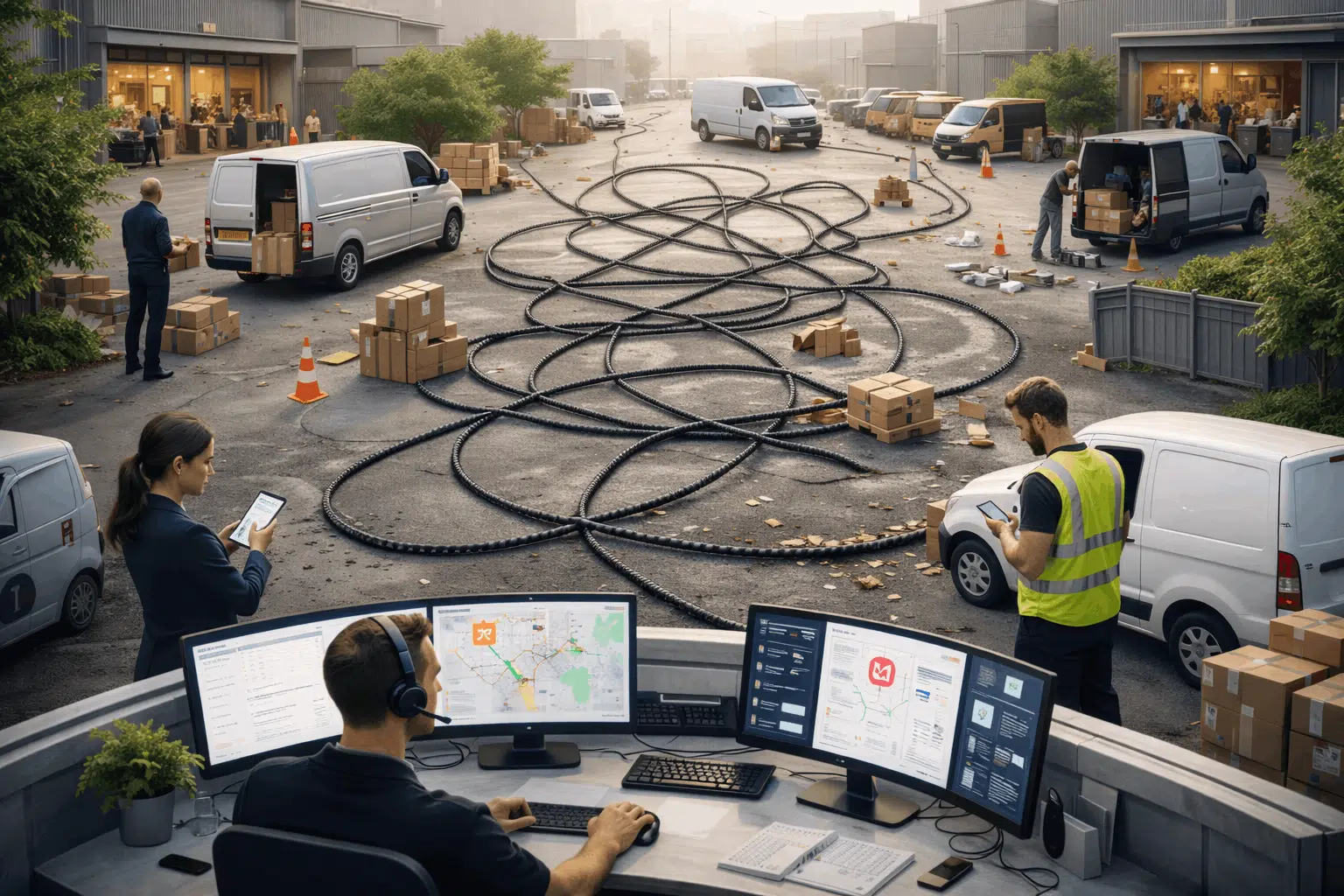
On the screen, the operation looks under control.
Dashboards show strong on-time performance. Delivery volumes are moving. Exception rates seem manageable. From a leadership perspective, the system appears to be working.
But on the ground, it’s a different story.
Dispatchers are manually reworking routes to recover missed windows. Drivers are dealing with access issues, unclear instructions, and last-minute changes. Customer service teams are fielding a constant stream of “Where is my order?” calls. And across sites, small inconsistencies in process and data are quietly compounding into cost, delays, and customer frustration.
This is the gap most organisations struggle to see clearly.
A delivery can be “on time” on a dashboard and still be a failure in reality.
That gap is what we call the messy middle.
In this article, we unpack what the messy middle actually is, why it exists inside even the most well-equipped enterprise supply chains, and how high performers close the gap.
What is the messy middle
The messy middle is where plans meet reality – and where most of the real work happens.
Executives often see clean summary metrics and assume the operation is under control, while frontline teams live in this middle layer where outcomes are inconsistent and the real drivers of cost are not captured properly.
In the messy middle, that “on-time” delivery might actually involve:
Incorrect or unclear customer instructions
Access issues at the delivery site
Partial or incomplete drops
Proof that isn’t defensible (missing photos, weak signatures)
Vague or inconsistent reason codes
None of that shows up cleanly in a summary metric.
Another common gap is the belief that processes are standardised across sites, when in reality each depot has its own rules, exceptions, customer expectations, and workarounds that never make it into the reporting layer.
That gap is the messy middle.
What executives don’t see (the visibility gap)
Most organisations know they have blind spots – but they underestimate how many there are, and how much cost sits inside them.
The biggest blind spots tend to sit in the messy middle:
Job failure is hidden – A job marked “complete” or “on time” may still have gone wrong – incomplete delivery, poor proof, or unresolved issues
Exception patterns aren’t captured – Issues are handled reactively, but not consistently recorded or structured in a way that drives improvement
Proof isn’t defensible – Missing photos, weak signatures, and unclear completion data lead to disputes, credits, and rework
Reason codes lack clarity – Vague or inconsistent inputs make it difficult to identify root causes or fix recurring problems
Depot-level variation is invisible – Different sites operate differently, but reporting presents a standardised view that hides this complexity
Tracking is mistaken for control – Location data exists, but ownership, workflows, and outcomes are not tightly managed
The impact of these blind spots compounds over time.
Costs increase through re-deliveries, overtime, and manual follow-ups. Customer experience suffers as communication becomes reactive and unreliable. Revenue leaks through disputes, credits, and slow invoice cycles. And internally, teams spend more time chasing information than improving performance.
How high performers close the gap
You can’t eliminate the messy middle, but you can bring structure and visibility to it. To close that gap, they focus on a few key principles:
Capture operational truth at the source – Data is recorded once, consistently, and at the point of execution, not reconstructed later
Standardise what matters – Clear completion outcomes, reason codes, and proof requirements create consistency across sites
Build structured exception workflows – Issues are not just handled, they are owned, tracked, and used to drive improvement
Align teams around the same view of reality – Operations, customer service, finance, and leadership all work from the same trusted data
Prioritise control, not just visibility – Tracking is paired with accountability, ownership, and clear processes that prevent repeat failures
Just as importantly, they treat this as an operational discipline, not a one-time technology rollout.
They start small, prove value quickly, and build momentum through consistent execution. Over time, the messy middle becomes less about firefighting and more about controlled, measurable improvement
The bottom line
The messy middle is an operational gap between what’s happening on the ground and what leadership believes is happening.
The organisations that close that gap won’t just improve visibility – they’ll reduce cost, prevent failures, and build a supply chain that can scale with confidence. Just as importantly, they’ll deliver better and more reliable customer and driver experiences – building trust and customer loyalty.
If you’re seeing signs of the messy middle in your own operation, it may be time to take a closer look at how your last mile is really performing.
To learn more about how Radaro helps enterprise teams bring structure, visibility, and control to their delivery operations, get in touch via our website or contact us at support@radaro.com.au.
Subscribe to our Newsletter
Get Started with Radaro
Last mile delivery software designed for complex, real-world logistics.
Related Posts
Related Posts
Leader's Digest Insights



Take Control of Your Last Mile
Discover what Radaro can do for you



"/><stop offset="1" stop-color="rgba(114, 163, 190, 0)"/></linearGradient></defs><g d="M 72 37.3 L 96.4 37.3 C 98.6 37.3 100.4 35.7 100.6 33.5 C 100.8 31.3 101.2 27.1 101.2 22.2 C 101.2 17.3 101 14.4 100.7 12.1 C 100.4 9.8 98.7 8.4 96.5 8.4 L 72 8.4 L 72 37.2 Z M 80 30.3 L 77.3 30.3 L 77.3 4.9 L 80 4.9 Z M 71 5.1 C 71.552 5.1 72 5.548 72 6.1 L 72 37.6 C 72 38.152 71.552 38.6 71 38.6 L 1 38.6 C 0.448 38.6 0 38.152 0 37.6 L 0 6.1 C 0 5.548 0.448 5.1 1 5.1 Z M 97.5 37.1 L 5.2 37.1 L 5.2 27.3 L 100.5 27.3 L 100.5 34.1 C 100.5 35.8 99.2 37.1 97.5 37.1 Z M 79.5 31.7 L 99.4 31.7 C 101.6 31.7 103.4 30.1 103.6 27.9 C 103.8 25.7 104.2 21.5 104.2 16.6 C 104.2 12.1 104 8.8 103.7 6.5 C 103.4 4.2 101.7 2.8 99.5 2.8 L 79.5 2.8 L 79.5 31.6 Z M 88.7 28.2 L 94.3 29.3 L 102 30.8 C 101.3 31.3 100.4 31.7 99.4 31.7 L 79.5 31.7 L 79.5 28.2 Z M 76.4 1.2 C 76.952 1.2 77.4 1.648 77.4 2.2 L 77.4 31.9 C 77.4 32.452 76.952 32.9 76.4 32.9 L 6.4 32.9 C 5.848 32.9 5.4 32.452 5.4 31.9 L 5.4 2.2 C 5.4 1.648 5.848 1.2 6.4 1.2 Z M 76.9 32.7 L 5.7 32.7 L 5.7 31.1 L 76.9 31.1 Z M 76.4 1.2 C 76.952 1.2 77.4 1.648 77.4 2.2 L 77.4 31.9 C 77.4 32.452 76.952 32.9 76.4 32.9 L 6.4 32.9 C 5.848 32.9 5.4 32.452 5.4 31.9 L 5.4 2.2 C 5.4 1.648 5.848 1.2 6.4 1.2 Z M 89.3 5.4 C 89 5.4 88.9 5.7 89 6 C 89.5 7.4 91 11.9 91 17.1 C 91 22.3 89.6 26.5 89 27.9 C 88.4 29.3 89 28.4 89.3 28.5 L 93.9 29.2 C 94.3 29.2 94.7 29 94.8 28.7 C 95.4 27.2 96.9 22.9 96.9 17 C 96.9 11.1 95.4 6.7 94.7 5.2 C 94 3.7 94.2 4.6 93.8 4.7 L 89.2 5.5 Z M 85.7 5.1 L 82.1 5.1 C 81.8 5.1 81.6 4.9 81.6 4.6 L 81.6 4.4 C 81.6 4.1 81.8 3.9 82.1 3.9 L 91.9 3.9 L 86.8 5 C 86.4 5 86.1 5.1 85.7 5.1 Z M 85.6 29.2 L 81.9 29.2 C 81.7 29.2 81.5 29.4 81.5 29.6 L 81.5 30 C 81.5 30.2 81.7 30.4 81.9 30.4 L 91.8 30.4 L 86.7 29.3 C 86.3 29.3 85.9 29.2 85.6 29.2 Z M 104.2 16.9 C 104.2 20 104.1 22.6 103.9 24.8 C 103.2 24.7 102.8 24.1 102.8 23.4 L 102.8 11.1 C 102.8 10.4 103.3 9.8 103.9 9.7 C 104 11.6 104.1 14 104.1 16.9 Z M 99.6 3.3 L 100.2 2.9 C 102 3.2 103.5 4.7 103.7 6.6 L 103.7 7 C 103.4 7.2 103.1 7.1 103 7 C 102.7 6.2 101.8 4.8 99.6 4.1 C 99.3 4.1 99.3 3.6 99.6 3.4 Z M 99.6 31.1 L 100.2 31.5 C 102 31.2 103.5 29.7 103.7 27.8 L 103.7 27.4 C 103.4 27.2 103.1 27.3 103 27.4 C 102.7 28.2 101.8 29.6 99.6 30.3 C 99.3 30.3 99.3 30.8 99.6 31 Z M 89.7 2.8 L 88.4 1 C 88.3 0.8 88.4 0.6 88.5 0.4 L 89.1 0 C 89.5 0 89.9 0.2 90.2 0.6 L 90.6 1.2 C 90.9 1.6 91 2.1 91 2.5 L 91 3.7 L 89.7 3.7 L 89.7 2.7 Z M 89.7 31.4 L 88.4 33.2 C 88.3 33.4 88.4 33.6 88.5 33.8 L 89.1 34.2 C 89.5 34.2 89.9 34 90.2 33.6 L 90.6 33 C 90.9 32.6 91 32.1 91 31.7 L 91 30.5 L 89.7 30.5 L 89.7 31.5 Z" fill="transparent" height="38.599999904632575px" id="LuoQ0xnNj" width="104.20000000000002px"><g d="M 72 37.3 L 96.4 37.3 C 98.6 37.3 100.4 35.7 100.6 33.5 C 100.8 31.3 101.2 27.1 101.2 22.2 C 101.2 17.3 101 14.4 100.7 12.1 C 100.4 9.8 98.7 8.4 96.5 8.4 L 72 8.4 L 72 37.2 Z M 80 30.3 L 77.3 30.3 L 77.3 4.9 L 80 4.9 Z M 71 5.1 C 71.552 5.1 72 5.548 72 6.1 L 72 37.6 C 72 38.152 71.552 38.6 71 38.6 L 1 38.6 C 0.448 38.6 0 38.152 0 37.6 L 0 6.1 C 0 5.548 0.448 5.1 1 5.1 Z M 97.5 37.1 L 5.2 37.1 L 5.2 27.3 L 100.5 27.3 L 100.5 34.1 C 100.5 35.8 99.2 37.1 97.5 37.1 Z M 79.5 31.7 L 99.4 31.7 C 101.6 31.7 103.4 30.1 103.6 27.9 C 103.8 25.7 104.2 21.5 104.2 16.6 C 104.2 12.1 104 8.8 103.7 6.5 C 103.4 4.2 101.7 2.8 99.5 2.8 L 79.5 2.8 L 79.5 31.6 Z M 88.7 28.2 L 94.3 29.3 L 102 30.8 C 101.3 31.3 100.4 31.7 99.4 31.7 L 79.5 31.7 L 79.5 28.2 Z M 76.4 1.2 C 76.952 1.2 77.4 1.648 77.4 2.2 L 77.4 31.9 C 77.4 32.452 76.952 32.9 76.4 32.9 L 6.4 32.9 C 5.848 32.9 5.4 32.452 5.4 31.9 L 5.4 2.2 C 5.4 1.648 5.848 1.2 6.4 1.2 Z M 76.9 32.7 L 5.7 32.7 L 5.7 31.1 L 76.9 31.1 Z M 76.4 1.2 C 76.952 1.2 77.4 1.648 77.4 2.2 L 77.4 31.9 C 77.4 32.452 76.952 32.9 76.4 32.9 L 6.4 32.9 C 5.848 32.9 5.4 32.452 5.4 31.9 L 5.4 2.2 C 5.4 1.648 5.848 1.2 6.4 1.2 Z M 89.3 5.4 C 89 5.4 88.9 5.7 89 6 C 89.5 7.4 91 11.9 91 17.1 C 91 22.3 89.6 26.5 89 27.9 C 88.4 29.3 89 28.4 89.3 28.5 L 93.9 29.2 C 94.3 29.2 94.7 29 94.8 28.7 C 95.4 27.2 96.9 22.9 96.9 17 C 96.9 11.1 95.4 6.7 94.7 5.2 C 94 3.7 94.2 4.6 93.8 4.7 L 89.2 5.5 Z M 85.7 5.1 L 82.1 5.1 C 81.8 5.1 81.6 4.9 81.6 4.6 L 81.6 4.4 C 81.6 4.1 81.8 3.9 82.1 3.9 L 91.9 3.9 L 86.8 5 C 86.4 5 86.1 5.1 85.7 5.1 Z M 85.6 29.2 L 81.9 29.2 C 81.7 29.2 81.5 29.4 81.5 29.6 L 81.5 30 C 81.5 30.2 81.7 30.4 81.9 30.4 L 91.8 30.4 L 86.7 29.3 C 86.3 29.3 85.9 29.2 85.6 29.2 Z M 104.2 16.9 C 104.2 20 104.1 22.6 103.9 24.8 C 103.2 24.7 102.8 24.1 102.8 23.4 L 102.8 11.1 C 102.8 10.4 103.3 9.8 103.9 9.7 C 104 11.6 104.1 14 104.1 16.9 Z M 99.6 3.3 L 100.2 2.9 C 102 3.2 103.5 4.7 103.7 6.6 L 103.7 7 C 103.4 7.2 103.1 7.1 103 7 C 102.7 6.2 101.8 4.8 99.6 4.1 C 99.3 4.1 99.3 3.6 99.6 3.4 Z M 99.6 31.1 L 100.2 31.5 C 102 31.2 103.5 29.7 103.7 27.8 L 103.7 27.4 C 103.4 27.2 103.1 27.3 103 27.4 C 102.7 28.2 101.8 29.6 99.6 30.3 C 99.3 30.3 99.3 30.8 99.6 31 Z M 89.7 2.8 L 88.4 1 C 88.3 0.8 88.4 0.6 88.5 0.4 L 89.1 0 C 89.5 0 89.9 0.2 90.2 0.6 L 90.6 1.2 C 90.9 1.6 91 2.1 91 2.5 L 91 3.7 L 89.7 3.7 L 89.7 2.7 Z M 89.7 31.4 L 88.4 33.2 C 88.3 33.4 88.4 33.6 88.5 33.8 L 89.1 34.2 C 89.5 34.2 89.9 34 90.2 33.6 L 90.6 33 C 90.9 32.6 91 32.1 91 31.7 L 91 30.5 L 89.7 30.5 L 89.7 31.5 Z" fill="transparent" height="38.599999904632575px" id="zezgG8Y1q" width="104.20000000000002px"><g opacity="0.4"><path d="M 0 28.9 L 24.4 28.9 C 26.6 28.9 28.4 27.3 28.6 25.1 C 28.8 22.9 29.2 18.7 29.2 13.8 C 29.2 8.9 29 6 28.7 3.7 C 28.4 1.4 26.7 0 24.5 0 L 0 0 L 0 28.8 Z" fill="rgb(215, 227, 232)" height="28.900000000000006px" id="m6px2y2al" transform="translate(72 8.4)" width="29.19999999999999px"/></g><path d="M 2.7 25.4 L 0 25.4 L 0 0 L 2.7 0 Z" fill="rgb(7, 64, 89)" height="25.4px" id="cyMhIGwIO" transform="translate(77.3 4.9)" width="2.700000000000017px"/><g opacity="0.4"><path d="M 71 0 C 71.552 0 72 0.448 72 1 L 72 32.5 C 72 33.052 71.552 33.5 71 33.5 L 1 33.5 C 0.448 33.5 0 33.052 0 32.5 L 0 1 C 0 0.448 0.448 0 1 0 Z" fill="rgb(215, 227, 232)" height="33.50000000000001px" id="V9wSu3WkR" transform="translate(0 5.1)" width="72px"/></g><g opacity="0.8"><path d="M 92.3 9.8 L 0 9.8 L 0 0 L 95.3 0 L 95.3 6.8 C 95.3 8.5 94 9.8 92.3 9.8 Z" fill="url(%23NPpo5c7u7-389490388-linear-gradient)" height="9.800000000000011px" id="NPpo5c7u7" transform="translate(5.2 27.3)" width="95.29999999999998px"/></g><path d="M 0 28.9 L 19.9 28.9 C 22.1 28.9 23.9 27.3 24.1 25.1 C 24.3 22.9 24.7 18.7 24.7 13.8 C 24.7 9.3 24.5 6 24.2 3.7 C 23.9 1.4 22.2 0 20 0 L 0 0 L 0 28.8 Z" fill="rgb(215, 227, 232)" height="28.9px" id="QiYhvoPI2" transform="translate(79.5 2.8)" width="24.700000000000017px"/><g opacity="0.4"><path d="M 9.2 0 L 14.8 1.1 L 22.5 2.6 C 21.8 3.1 20.9 3.5 19.9 3.5 L 0 3.5 L 0 0 Z" fill="rgb(114, 163, 190)" height="3.5px" id="iw09x_5cV" transform="translate(79.5 28.2)" width="22.5px"/></g><path d="M 71 0 C 71.552 0 72 0.448 72 1 L 72 30.7 C 72 31.252 71.552 31.7 71 31.7 L 1 31.7 C 0.448 31.7 0 31.252 0 30.7 L 0 1 C 0 0.448 0.448 0 1 0 Z" fill="rgb(249, 250, 252)" height="31.70000000000001px" id="enHG0Xv5x" transform="translate(5.4 1.2)" width="71.99999999999999px"/><g opacity="0.4"><path d="M 71.2 1.6 L 0 1.6 L 0 0 L 71.2 0 Z" fill="rgb(114, 163, 190)" height="1.6000000000000156px" id="nNlyDyI8O" transform="translate(5.7 31.1)" width="71.20000000000002px"/></g><path d="M 71 0 C 71.552 0 72 0.448 72 1 L 72 30.7 C 72 31.252 71.552 31.7 71 31.7 L 1 31.7 C 0.448 31.7 0 31.252 0 30.7 L 0 1 C 0 0.448 0.448 0 1 0 Z" fill="transparent" height="31.70000000000001px" id="fXaCrMspo" stroke-dasharray="" stroke-linecap="butt" stroke-linejoin="miter" stroke-miterlimit="10" stroke-width="1" stroke="rgb(215, 227, 232)" transform="translate(5.4 1.2)" width="71.99999999999999px"/><path d="M 7.8 1.5 C 7.5 1.5 7.4 1.8 7.5 2.1 C 8 3.5 9.5 8 9.5 13.2 C 9.5 18.4 8.1 22.6 7.5 24 C 6.9 25.4 7.5 24.5 7.8 24.6 L 12.4 25.3 C 12.8 25.3 13.2 25.1 13.3 24.8 C 13.9 23.3 15.4 19 15.4 13.1 C 15.4 7.2 13.9 2.8 13.2 1.3 C 12.5 -0.2 12.7 0.7 12.3 0.8 L 7.7 1.6 Z M 4.2 1.2 L 0.6 1.2 C 0.3 1.2 0.1 1 0.1 0.7 L 0.1 0.5 C 0.1 0.2 0.3 0 0.6 0 L 10.4 0 L 5.3 1.1 C 4.9 1.1 4.6 1.2 4.2 1.2 Z M 4.1 25.3 L 0.4 25.3 C 0.2 25.3 0 25.5 0 25.7 L 0 26.1 C 0 26.3 0.2 26.5 0.4 26.5 L 10.3 26.5 L 5.2 25.4 C 4.8 25.4 4.4 25.3 4.1 25.3 Z M 22.7 13 C 22.7 16.1 22.6 18.7 22.4 20.9 C 21.7 20.8 21.3 20.2 21.3 19.5 L 21.3 7.2 C 21.3 6.5 21.8 5.9 22.4 5.8 C 22.5 7.7 22.6 10.1 22.6 13 Z" fill="rgb(7, 64, 89)" height="26.499999237060543px" id="zg2puoduN" transform="translate(81.5 3.9)" width="22.699999237060524px"/><path d="M 0.225 0.4 L 0.825 0 C 2.625 0.3 4.125 1.8 4.325 3.7 L 4.325 4.1 C 4.025 4.3 3.725 4.2 3.625 4.1 C 3.325 3.3 2.425 1.9 0.225 1.2 C -0.075 1.2 -0.075 0.7 0.225 0.5 Z M 0.225 28.2 L 0.825 28.6 C 2.625 28.3 4.125 26.8 4.325 24.9 L 4.325 24.5 C 4.025 24.3 3.725 24.4 3.625 24.5 C 3.325 25.3 2.425 26.7 0.225 27.4 C -0.075 27.4 -0.075 27.9 0.225 28.1 Z" fill="rgb(255, 184, 41)" height="28.599999167607464px" id="yJQ3TgwJ6" transform="translate(99.375 2.9)" width="4.325000000000017px"/><path d="M 1.341 2.8 L 0.041 1 C -0.059 0.8 0.041 0.6 0.141 0.4 L 0.741 0 C 1.141 0 1.541 0.2 1.841 0.6 L 2.241 1.2 C 2.541 1.6 2.641 2.1 2.641 2.5 L 2.641 3.7 L 1.341 3.7 L 1.341 2.7 Z M 1.341 31.4 L 0.041 33.2 C -0.059 33.4 0.041 33.6 0.141 33.8 L 0.741 34.2 C 1.141 34.2 1.541 34 1.841 33.6 L 2.241 33 C 2.541 32.6 2.641 32.1 2.641 31.7 L 2.641 30.5 L 1.341 30.5 L 1.341 31.5 Z" fill="rgb(7, 64, 89)" height="34.2px" id="QzqBzedlz" transform="translate(88.359 0)" width="2.6414213562373448px"/></g></g></svg>)

Radaro is the intelligent delivery management platform built for complex, real-world supply chains.
Deliver Better At Every Mile.
Company
Radaro © 2026. All rights reserved.
Take Control of Your Last Mile
Discover what Radaro can do for you
Radaro is the intelligent delivery management platform built for complex, real-world supply chains.
Deliver Better At Every Mile.
Company
Radaro © 2026. All rights reserved.
Take Control of Your Last Mile
Discover what Radaro can do for you
Radaro is the intelligent delivery management platform built for complex, real-world supply chains.
Deliver Better At Every Mile.
Radaro © 2026. All rights reserved.
Take Control of Your Last Mile
Discover what Radaro can do for you
Radaro is the intelligent delivery management platform built for complex, real-world supply chains.
Deliver Better At Every Mile.
Company
Radaro © 2026. All rights reserved.
